Populii UX Transformation

Populii is a platform focused on helping organizations shape and assess workplace culture. Over time, its ecosystem expanded to include both culture-shaping skills and assessment tools, originally split across two separate entities — Populii and Orgfitech.

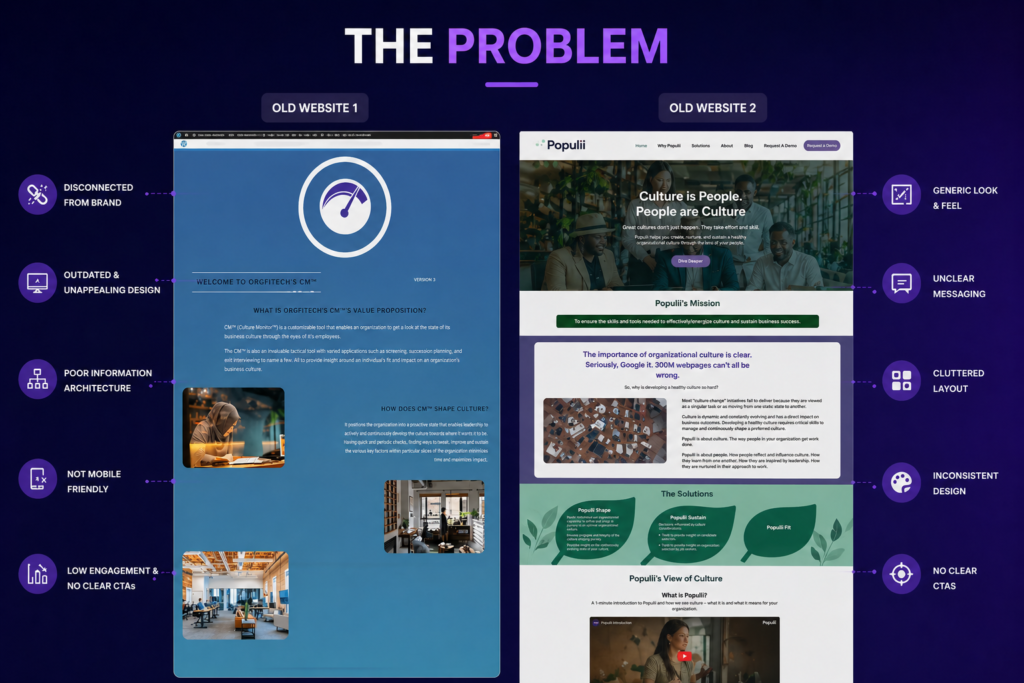
After merging under a single brand, the platform struggled to reflect this shift. Information was fragmented, navigation lacked clarity, and users were unable to clearly understand how the offerings connected.

This project focused on transforming a disconnected experience into a cohesive, structured system that simplifies how users discover, understand, and navigate Populii’s offerings.

Role: UX Researcher & Team Lead
Timeline: 2025 – 2025
Scope: Information Architecture, Brand Integration, Website Redesign, Visual System Alignment


The Problem

The core issue wasn’t visual — it was structural.

Populii and Orgfitech had been developed as separate brands, each with its own identity and content structure. After merging, the experience remained fragmented. Users were exposed to disconnected information, unclear relationships between offerings, and inconsistent navigation patterns.

This created unnecessary cognitive load and weakened the clarity of the platform.


Key Insight

Users don’t think in terms of brands or internal structures.
They think in terms of what they need and how to achieve it.

Populii offered two core value types:

  • skills that help shape culture
  • tools that help assess it

But these were not clearly structured or communicated within the experience.

The breakthrough came from reframing the problem:

Instead of trying to merge everything into one flat structure, the system needed to be organized around user understanding, not internal organization.


Defining the Direction

Rather than forcing all content into a single undifferentiated space, the structured approach was introduced:

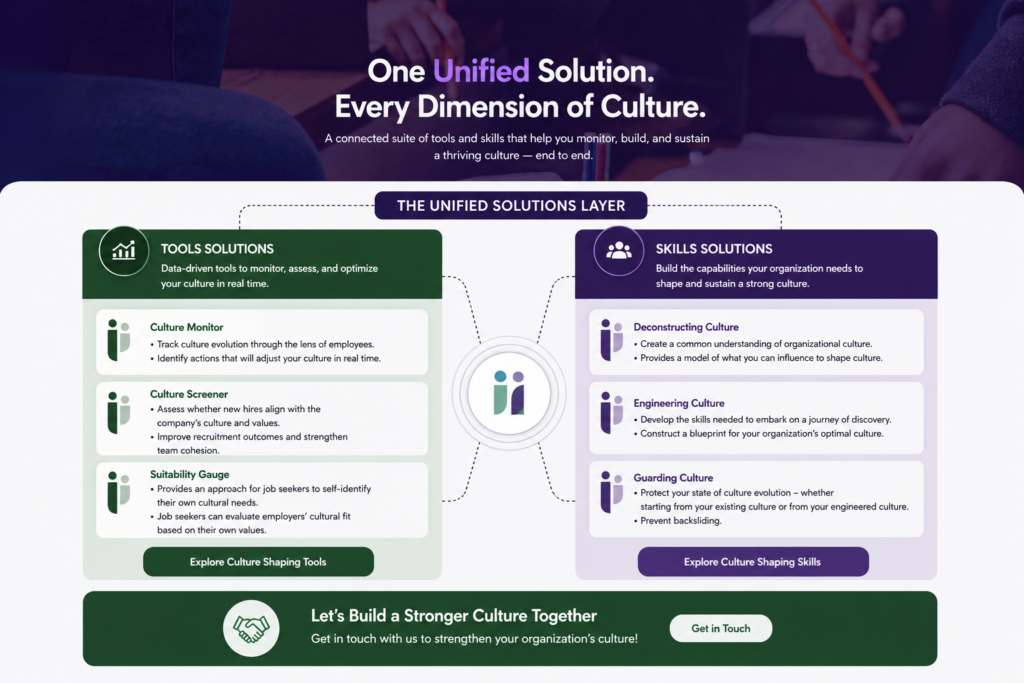
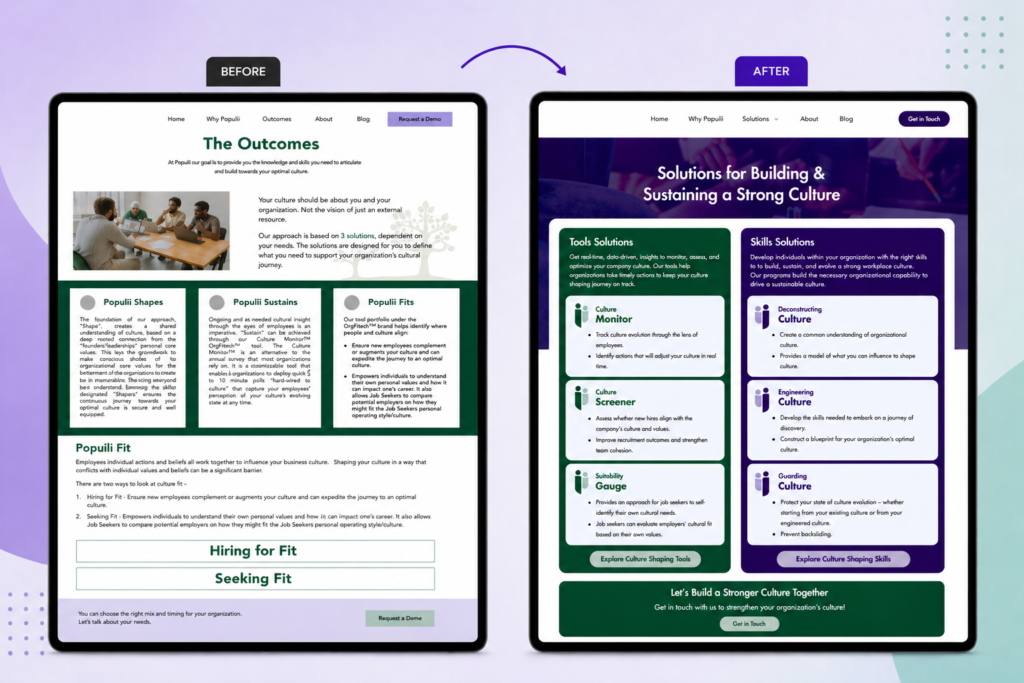
A unified Solutions layer that brings everything together, while clearly distinguishing between different types of offerings.

This allowed the platform to feel like a single system, without losing clarity.


Solution

Re-structuring the Experience Around “Solutions”

To bring clarity to the experience, I introduced a centralized Solutions layer that acts as the primary entry point.

This replaced fragmented navigation with a single, structured overview of what Populii offers. Instead of searching across disconnected pages, users can now understand the full system in one place.


Structuring Around User Understanding

Within this layer, offerings were organized into clearly defined categories based on their purpose:

  • Culture shaping skills
  • Assessment tools

This simple distinction solved a major clarity issue. Users could now immediately understand what each offering does and how it fits into their needs.


Re-architected Information Architecture
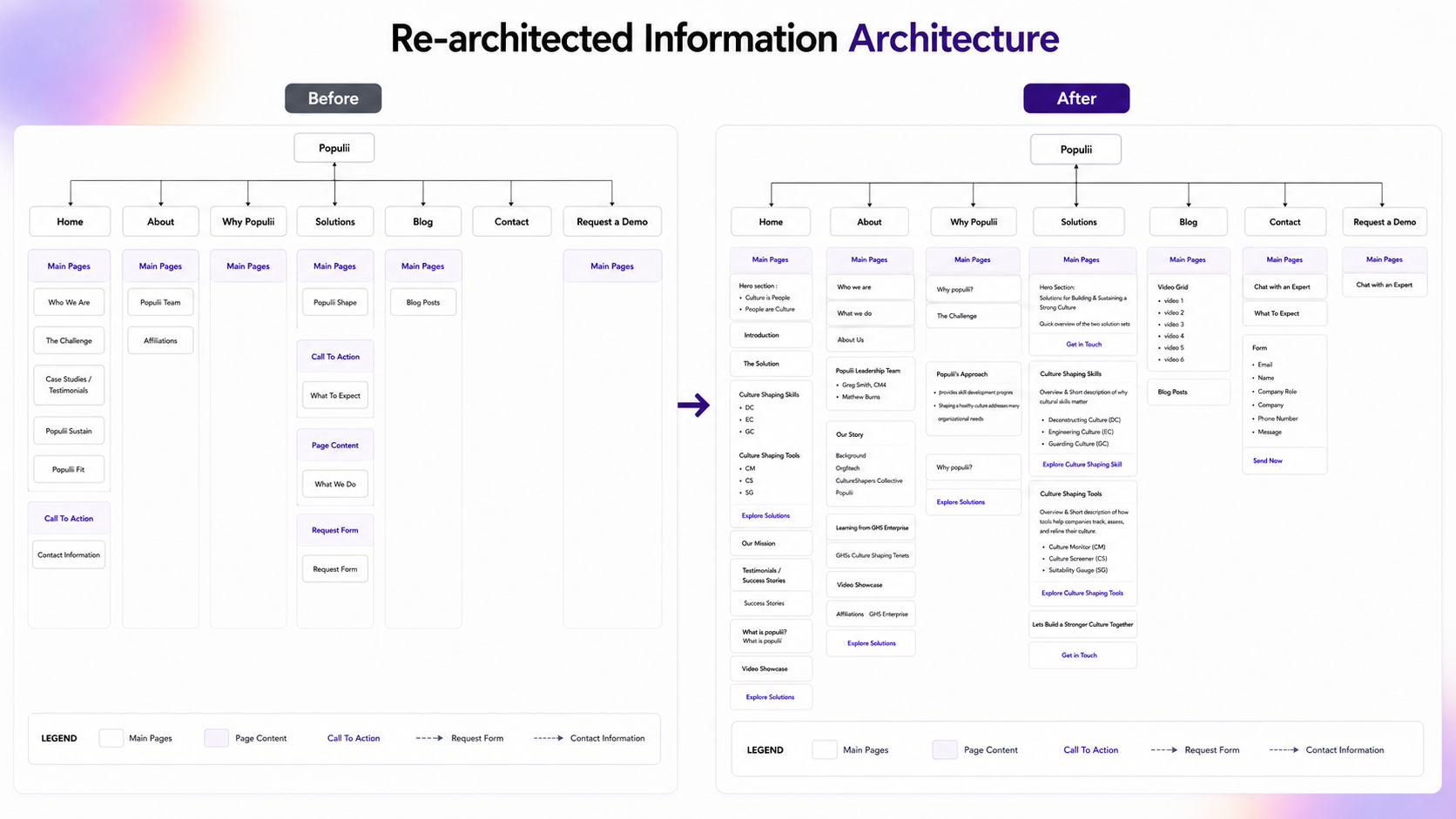
The navigation and sitemap were redesigned to support this new structure.

Content was reorganized based on user intent rather than internal logic, making it easier to explore the platform without prior knowledge.


Unifying the Visual Language

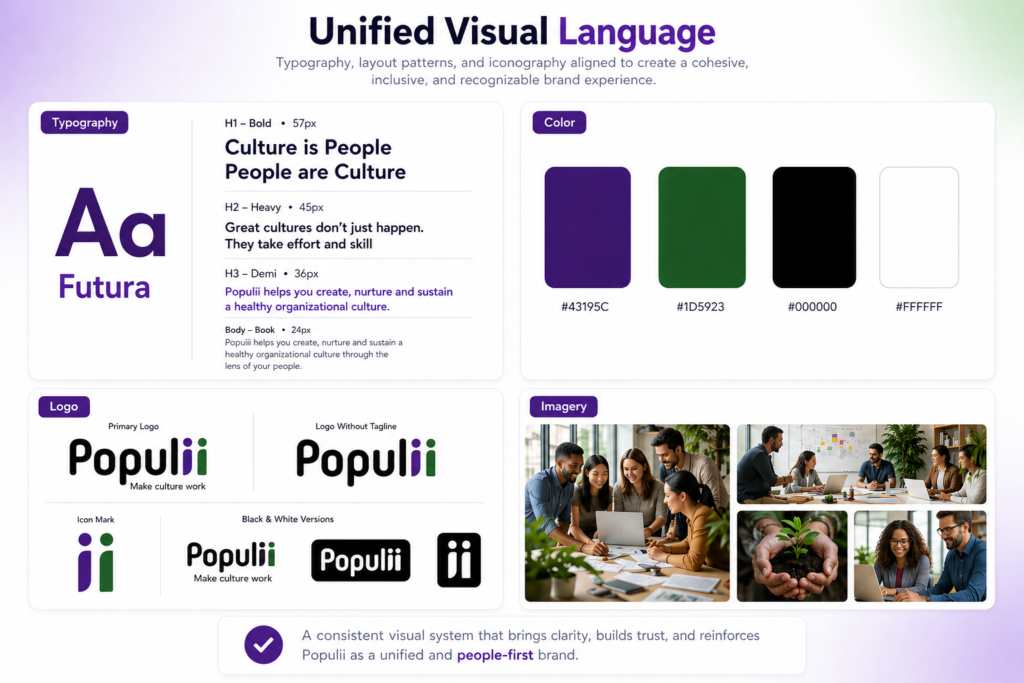
To support the structural changes, we established a consistent visual system across the platform.

Typography, layout patterns, and iconography were aligned to create a cohesive experience that reinforces the idea of a single, unified product.


Impact

The final outcome transformed how the platform is understood and experienced.

The experience is now more intuitive, with a clear structure that reduces confusion and improves navigation. Users can easily distinguish between different types of offerings while still perceiving them as part of a unified system.

From a business perspective, the platform now presents its value more clearly, strengthening its positioning and making it easier for users to engage with its services.


Reflection

This project reinforced that strong UX is not about adding more — it’s about creating clarity.

The biggest shift came from moving away from a page-by-page approach and thinking in terms of systems. Once the structure was defined correctly, everything else — navigation, layout, and visuals — naturally aligned.

It also highlighted the importance of designing for scale. Solving the immediate problem is not enough if the system cannot support future growth.